
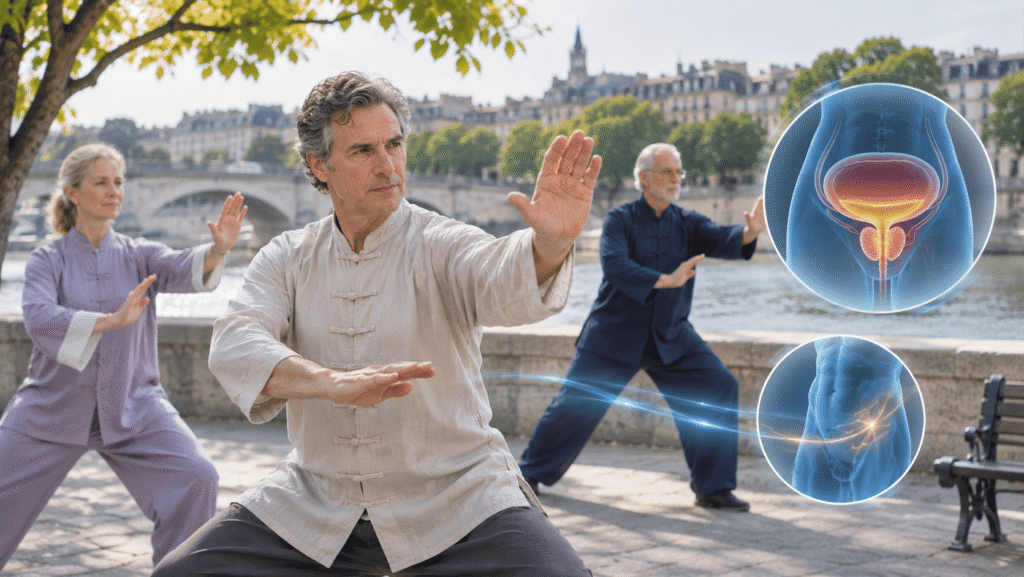
Bridging Eastern Wisdom and Modern Physiology
For many European men over 50, practices like Qigong and Tai Chi can sound abstract or unfamiliar. In Western terms, however, these ancient disciplines are sophisticated forms of neuromuscular retraining, breath regulation, and active recovery.
While Western medicine often views organs in isolation, Eastern traditions treat the body as an interconnected whole. What traditional masters call “Qi” or life energy can be understood modernly as the optimal flow of blood, oxygen, and nerve signals. Though often grouped together, Qigong and Tai Chi serve different yet complementary roles in supporting male pelvic and prostate health.
Qigong: Internal Breathwork and Organ Vitality
Qigong, translating roughly to “life energy cultivation,” focuses on repetitive, gentle movements combined with deep abdominal breathing and mental focus. Unlike external workouts, Qigong works from the inside out.
From a physiological perspective, Qigong acts as a rhythmic pump for your internal organs. When you combine slow arm movements with deep diaphragmatic breathing, your diaphragm moves downward, gently massaging the prostate gland and the bladder. This targeted movement stimulates microcirculation in the pelvic basin, bringing fresh oxygen to tight tissues and helping to relieve chronic muscle tension around the urinary tract.
Tai Chi: Fluid Flow and Pelvic Mobility
Tai Chi originated as a martial art, but for men over 50, it functions as a moving meditation focused on balance, posture, and weight shifting. It involves continuous, flowing sequences that require smooth transitions from one leg to the other.
This continuous weight shifting acts as a natural decompressor for the lower back and hips. By gently rotating the pelvis and stretching the inner thigh muscles, Tai Chi relieves the lateral tension that pulls on the pelvic floor. For desk-bound men, this fluid mobility helps reverse the postural stiffness that traps pelvic nerves and restricts natural urinary flow.
Daily Integration for Long-Term Comfort
You do not need to master complex martial arts forms to protect your prostate health. Integrating brief, targeted practices into your daily routine provides sustainable relief:

