
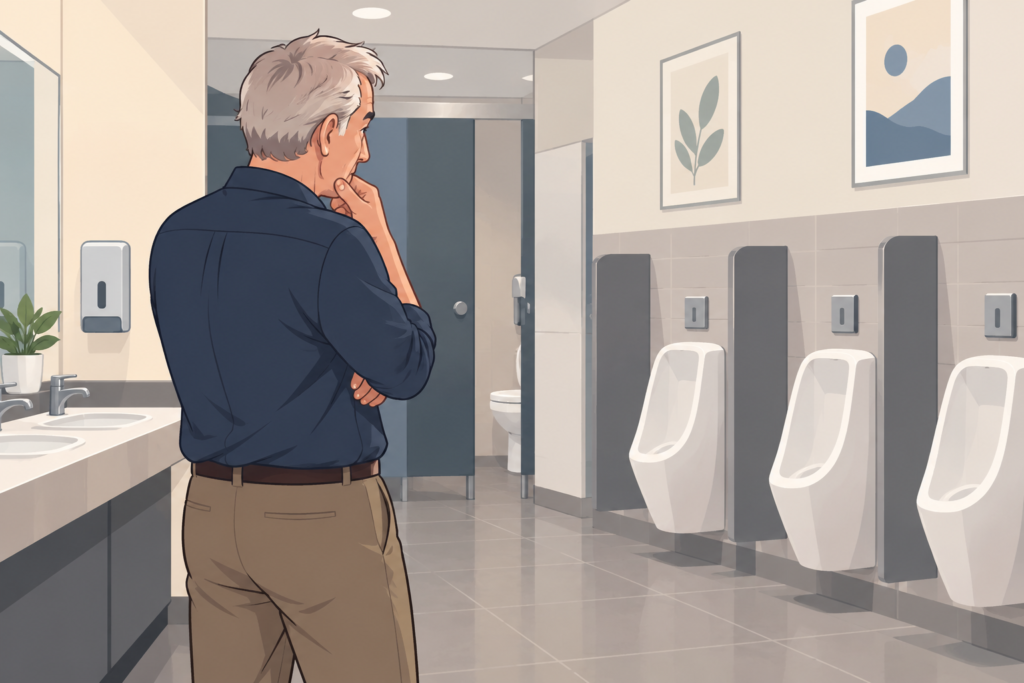
Waking up in the middle of the night to use the bathroom or finding yourself making more frequent trips during the day can become increasingly familiar with age. While these changes are common, they often raise an important question: how much of this is simply part of getting older, and when might it signal something worth paying attention to?
Ageing can bring gradual changes to the bladder, urinary system and, in men, the prostate, all of which may influence how often you need to urinate. However, frequent urination should not automatically be dismissed as a normal part of aging. Understanding what influences your urinary habits, and recognising when changes deserve closer attention, is an important step towards maintaining urinary health and everyday comfort.
What Does “Normal” Actually Look Like?
While every body is different, healthcare guidelines offer a clear baseline for healthy older adults:
During the Day
Urinating 6 to 8 times in 24 hours is standard for most adults with normal fluid intake.
At Night
Waking up once per night to use the bathroom is a typical part of aging.
However, regularly waking up two or more times a night or feeling an urgent need that disrupts your day—indicates a common condition known as Nocturia (frequent nighttime urination).
What Causes Increased Frequency?
When to Pay Closer Attention?
While increased frequency is typical, these symptoms fall outside natural aging and warrant a doctor’s visit:
- Pain, burning, or discomfort during urination
- Sudden, uncontrollable urges
- Blood in the urine or cloudy appearance
- Difficulty starting a stream or feeling unable to empty the bladder completely
- Complete inability to urinate
Frequent trips to the bathroom shouldn’t be something you simply learn to live with. Paying attention to how often you urinate and any changes in your symptoms can help you better understand your urinary health. If something doesn’t feel right or starts affecting your quality of life, don’t hesitate to speak to your doctor.

