
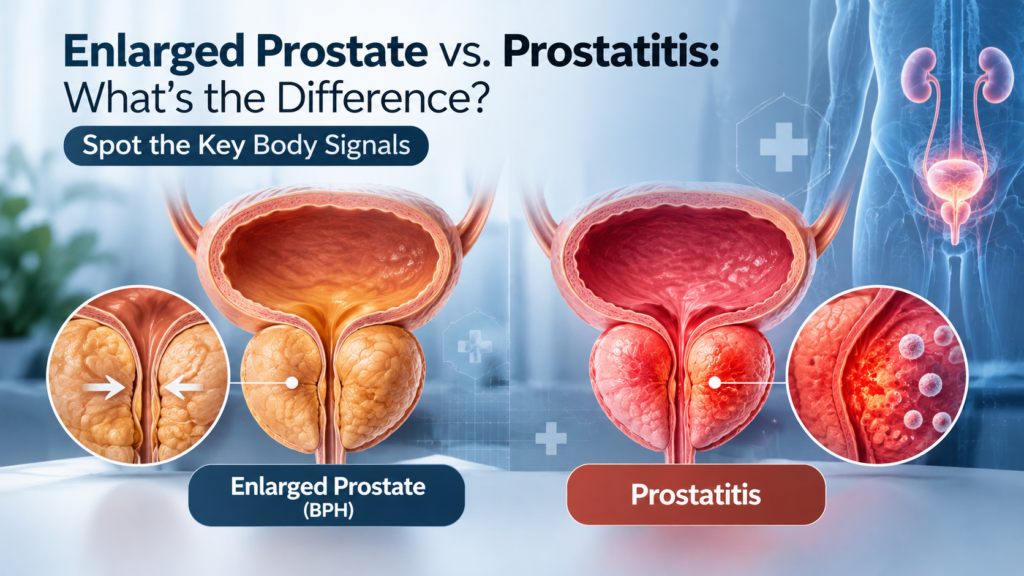
When the lower urinary tract begins sending biological signals—whether as a weakened urinary stream, frequent nighttime bathroom visits, or persistent pelvic discomfort—most men attribute it generally to prostate issues. However, these disruptions often stem from two distinct physiological conditions: Benign Prostatic Hyperplasia (BPH) and Prostatitis.
Understanding the biological differences between these two conditions reduces anxiety and serves as a vital step toward choosing the right approach to protect your body, ensuring long-term urological comfort and daily confidence.
1. Enlarged Prostate (BPH): A Structural Shift
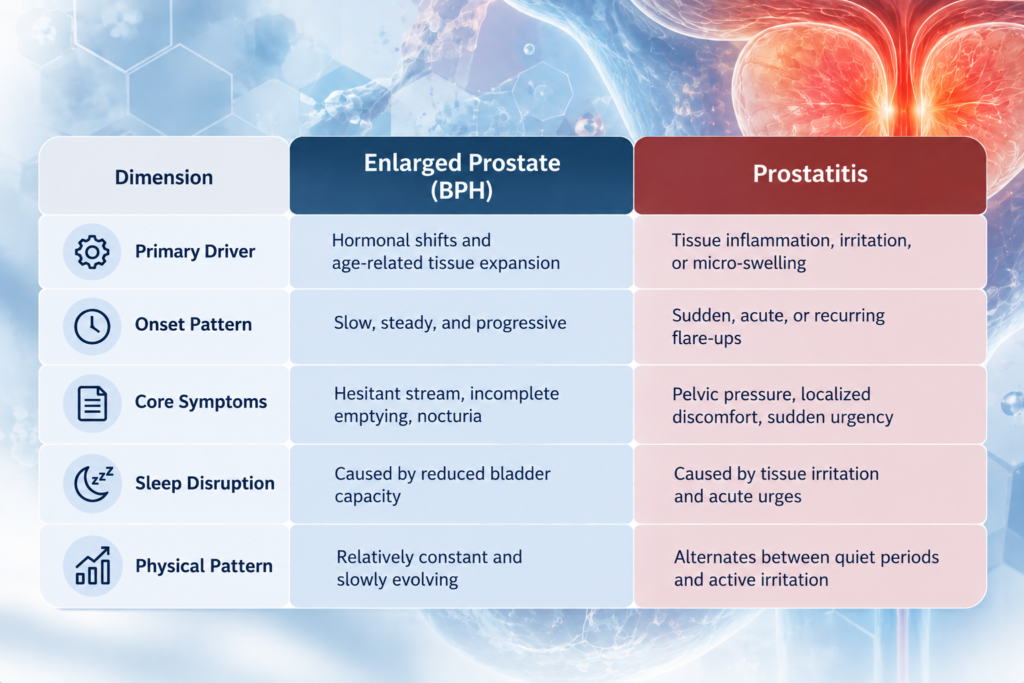
Benign Prostatic Hyperplasia (BPH) represents a natural, gradual expansion of prostate tissue cells. This cellular growth is driven primarily by shifting hormone ratios—specifically the increased conversion of natural testosterone into dihydrotestosterone.
- Pattern of Onset: Develops slowly and progressively over time (Gradual Onset).
- Internal Dynamics: As the prostate gland enlarges, it exerts mild mechanical pressure on the surrounding urethra.
- Primary Signals:
- Reduced urinary stream velocity and hesitation before flow begins.
- A feeling of incomplete bladder emptying or lingering urine.
- Frequent nocturnal awakenings to urinate.
2. Prostatitis: Tissue Inflammation and Irritation
In contrast, Prostatitis is not defined by natural tissue expansion. Instead, it arises from localized inflammation, micro-irritation within the urethral and prostate tissue, or underlying urinary tract sensitivities.
- Pattern of Onset: Signals often appear suddenly or occur in periodic flare-ups (Sudden or Episodic).
- Internal Dynamics: Involves swelling, localized micro-inflammation, and tissue hypersensitivity within the prostate lining and bladder base.
- Primary Signals:
- Dull aches, tightness, or burning sensations around the pelvic floor.
- Sudden, compelling urges to urinate, even when fluid volume is low.
- Discomfort during urination or impacts on physical relaxation during intimate moments.
Practical Habits for Prostate & Urological Health
Regardless of the underlying trigger, daily lifestyle choices play a crucial role in maintaining lower urinary tract comfort and protecting tissue health:

